• Home
  • App SwitchingRoom CalendarTouch RemoteScreen MirroringRoom ControlVCA CloudCost Savings
    All features
  • Download
  • Pricing
  • Help Center
  • Blog
  • Contact Us
Room Control

Expose smart meeting room scenes on the VCA Controller

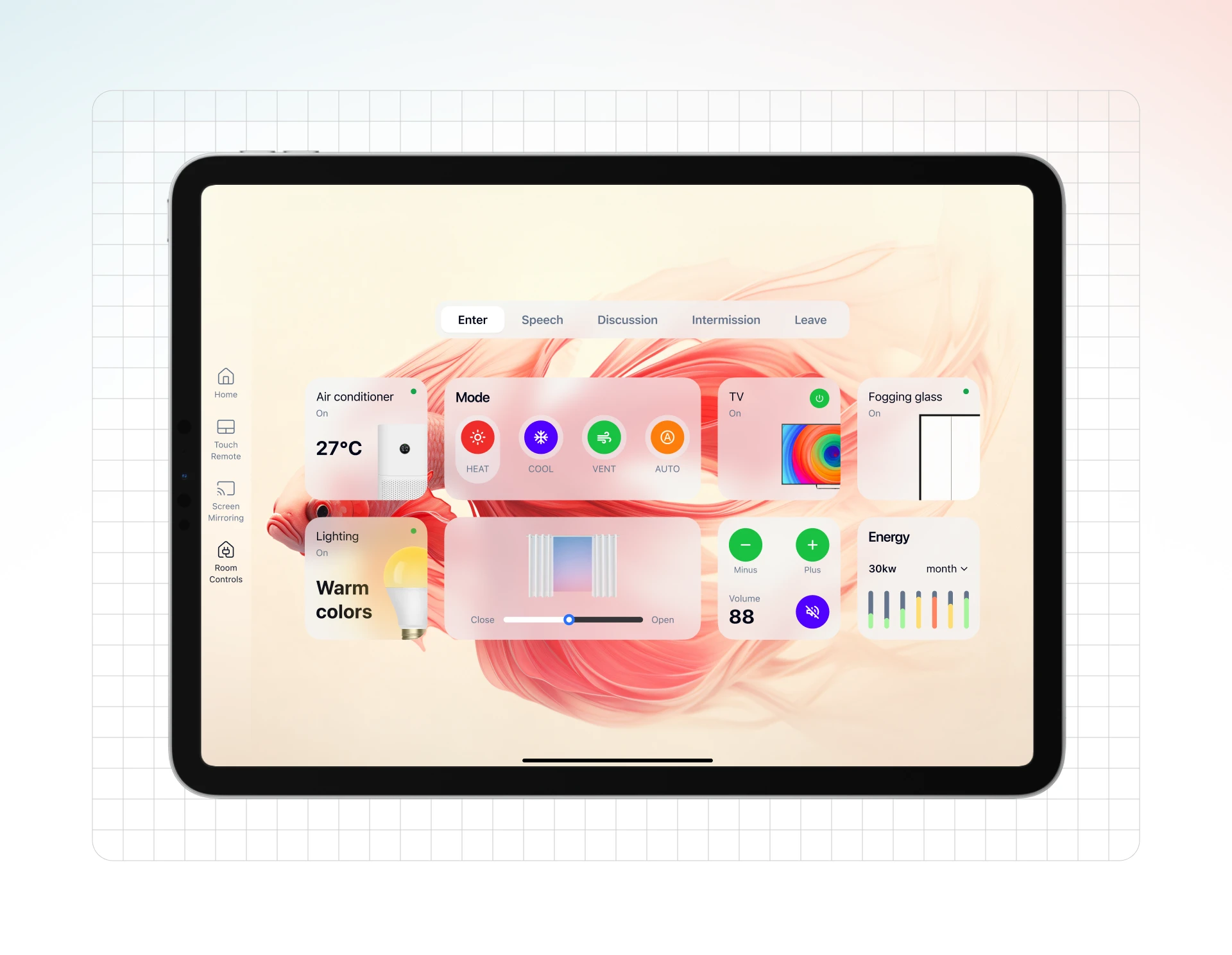
Room Control integrates with Home Assistant so meeting rooms can expose lighting, display, curtain, and scene controls from a tablet.
Request a demoRead setup docs
Smart meeting room controls on a controller tablet

What is Room Control?

Room Control connects the VCA Controller experience with a configured Home Assistant system. Instead of adding a separate proprietary control panel for every room, teams can expose selected smart devices, scenes, and automation actions on the meeting room tablet. This is useful for lighting, curtains, displays, environmental controls, and scene presets when the room already has or can adopt a Home Assistant-based smart control layer.

Verify in product documentation

Room Control setup flow

Room Control is aimed at teams that want practical room scenes without building every control surface as a custom AV integration project.

  1. 01

    Prepare Home Assistant

    Deploy and configure Home Assistant with the smart devices and scenes the meeting room should expose.

  2. 02

    Install required extensions

    Follow VCA documentation for kiosk-mode and ha_rest_api related setup where required.

  3. 03

    Create a secure token

    Use a long-lived access token with appropriate scope and store it according to your internal security practice.

  4. 04

    Expose controls on the tablet

    Configure the Controller so room users see the right devices, scenes, and automation actions.

Smart room control through an open home automation layer

Room Control is aimed at teams that want practical room scenes without building every control surface as a custom AV integration project.

What VCA controls and what Home Assistant provides

VCA displays and operates the control views you prepare in Home Assistant. Device integrations, automations, and room logic remain Home Assistant responsibilities.

A Home Assistant deployment is required

The room needs a reachable Home Assistant OS instance, configured devices, a control view, and the VCA integration.

Control quality depends on the underlying integrations

VCA cannot make an unreliable smart-device integration more reliable than it is in Home Assistant.

Related resources for smart rooms

Continue exploring VCA

Room Control docs

Read the Home Assistant setup requirements and Controller mode notes.

Touch Remote

Give users tablet-based control of the room Host in addition to smart room scenes.

Contact sales

Discuss whether Room Control fits your existing smart-room hardware and operations model.

Room Control FAQ

Concise answers to the questions teams ask before planning or deploying this capability.

Bring smart-room actions into the meeting workflow

Use VCA with Home Assistant to expose the room scenes people actually need during meetings.

Request a demoRead setup docs

One system, seamlessly connecting all video conferencing platforms.

Features

  • All features
  • App Switching
  • Room Calendar
  • Touch Remote
  • Screen Mirroring
  • Room Control
  • VCA Cloud
  • Cost Savings

Download

  • Host
  • Controller

Legal

  • Terms of Service
  • Privacy Policy
  • Open Source License

Product

  • Changelog
  • Roadmap
  • Classic

Newsletter

By submitting, you agree to our Privacy Policy

vcaapp.com © All rights reserved.

京ICP备18058666号-7

DeepLaunchAI Toolz Dir

Made with ❤️ by VCA Team

Home Assistant integration

VCA documentation describes Home Assistant OS, kiosk-mode, ha_rest_api, and long-lived token setup for the room control workflow.

Controller mode options

Teams can distinguish VCA Controller mode from Room Controller mode depending on whether the tablet is focused on meetings or smart room controls.

Scene and automation friendly

Common room actions can be grouped into scenes, such as presentation mode, video meeting mode, or room reset.

Compare options

How Room Control compares with proprietary control panels

Proprietary meeting-room control panels and custom AV integrator projects can be highly polished, but they often tie the room to a specific vendor stack or expensive custom work. Room Control is different because it builds on Home Assistant breadth and exposes selected room controls on the same tablet used for meeting operation. The trade-off is that a reliable Home Assistant system must already be configured and maintained.

Common approach
Who it suits
How VCA works
Proprietary room-control panel
High-end rooms standardized on one AV vendor ecosystem with dedicated support contracts.
VCA uses Home Assistant as the control layer, which can support a broader mix of smart devices and scenes.
Custom AV integrator project
Complex auditoriums, divisible rooms, or deployments needing specialized AV programming.
VCA is a lighter software path for common smart-room scenes when Home Assistant already covers the hardware.
Separate smart-home app on the tablet
Small rooms where users can switch apps and manage smart devices manually.
VCA can keep room control closer to the meeting Controller workflow and reduce app-switching friction.
Access tokens must be protected

The long-lived Home Assistant token used by the Host is sensitive and should be stored and rotated carefully.

Room-control deployment references

Use these first-party references to confirm deployment details before making a room decision.

Room Control setup

Deploy the integration, associate a view, and use it from the Controller.

System requirements

Confirm local network access between Host, Controller, and Home Assistant.

Home Assistant documentation

Configure devices, dashboards, users, tokens, and automations at the source.